VISITING STRONG CITY BEFORE MEMORIAL DAY
 Dear Kinfolk,
This week I took my grandson Hayden Lee Shaw (Patricia, Jim Lee, Alida, Elmer J.) a fifth generation Oklahoman, to visit the place where it all began, Strong City, Oklahoma.
It did not take long to tour Strong City consisting of a Community House, Baptist Church and about a dozen homes. Remember the earlier blog showing a hotel and shops taken in the early 1900’s?

Guernsey Homestead
Next we viewed the Guernsey homestead from a distance. I can still remember getting in trouble with Granddad for making my horse jump over that cattle guard. The original home has been replaced and I did not see any of the prairie dogs that my cousins and I would try to catch. I showed Hayden the culvert under the highway that we would ride our horses through.
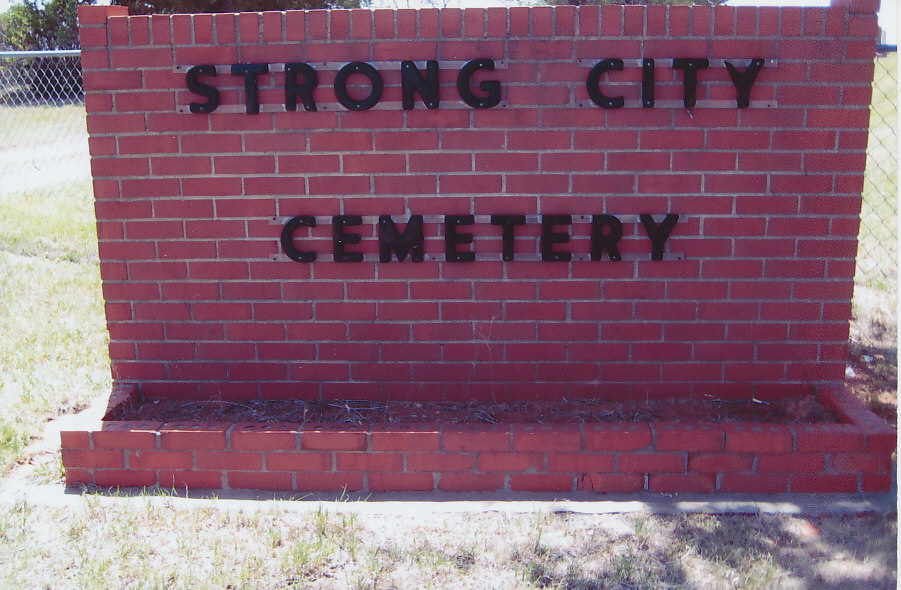
Then we went to the Strong City Cemetery. For a country cemetery, it is very well-kept. I think some of the oil lease money has helped. Cousin John Innes suggested that we might solve the correct spelling of our grandmothers name, (Madalena, Madelena, Lena, May) by looking at her gravestone. Sorry John they just shortened it to Lena H.

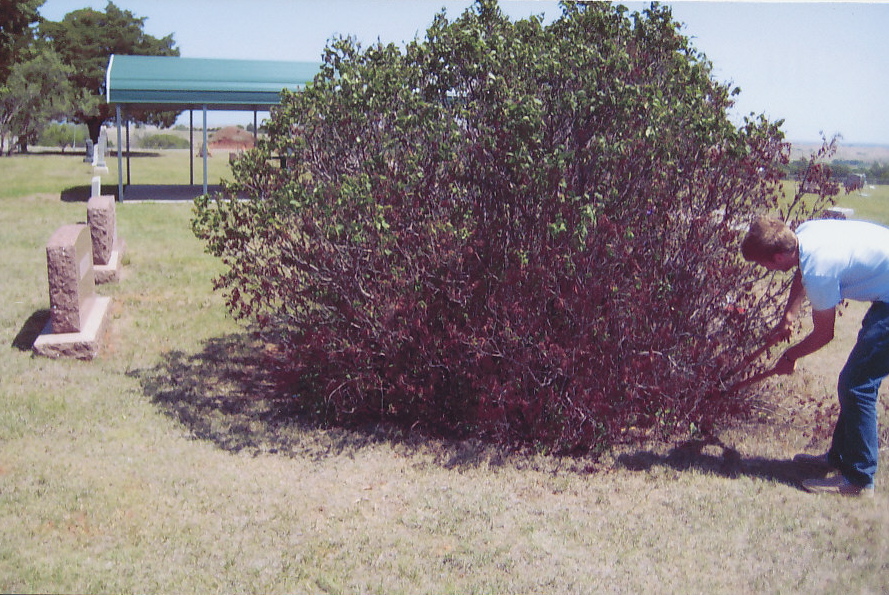
The large shrub by the Guernsey gravestones took a beating from last winter’s freezing storm.

Hayden took the clippers and removed the dead stems.
To continue Hayden’s family history lesson we drove about 7 miles to Cheyenne, Oklahoma. At the Court House we saw the County monument to all Roger Mills County Veterans.
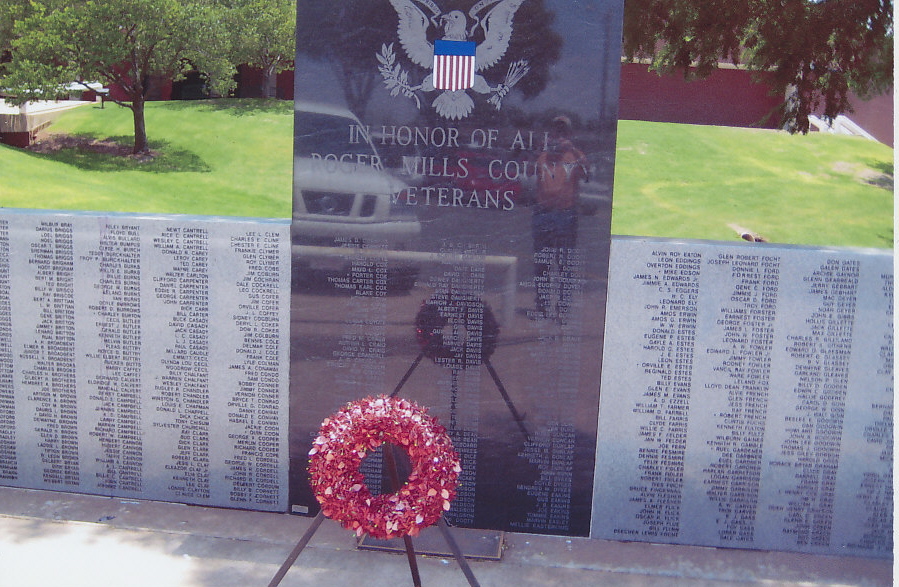
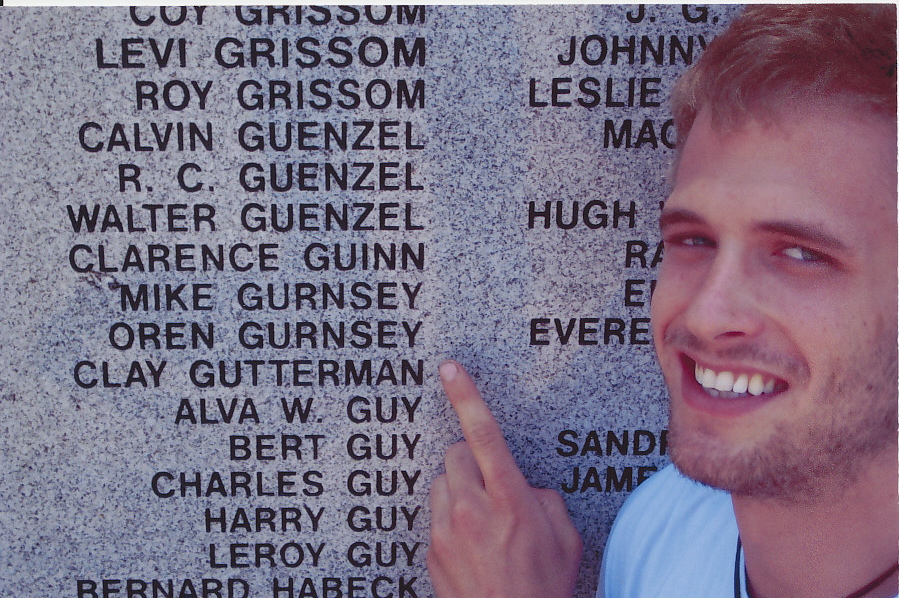
We found Uncle Mike’s name with a bad mis-spelling of his last name.
While at the Court House we took the opportunity to try and solve another mystery that our blog has brought up, did Granddad ever re-marry after Grandmother passed away in 1909? We looked at both the marriage and divorce records from 1910-1930. We could not find any records to verify this story. However, the 1920 census showed Elmer J. Guernsey as married? We found another record where Granddad sold land to the Cheyenne Short Line Railroad Co., 100 foot wide strip, for $900.00. No mention made of mineral rights.

The Roger Mills Court House has a beautiful large painting of the Battle of the Washita by Gene Dougherty, a good friend of mine. The picture is the scene of the tragic killing of Cheyenne Indians by Col. Custer. On Nov. 27, 1868, at daybreak, The 7th Regiment of the U.S. Cavalry commanded by Lt. Col. George Armstrong Custer, attacked with several hundred troops a small band of Cheyenne Indians under Chief Black Kettle. The scene was along the Washita River, only a few short miles from where the Washita River ran through the Guernsey ranch. Chief Black Kettle thought his tribe was at peace with a treaty from Washington. When he saw the troops coming from several directions, he waved a white flag of surrender. Custer’s troops massacred more than a hundred men, women and children. The village was burned and nearly 800 horses were shot. If you would like to read more about this part of our history I would recommend the book THE BATTLE OF THE WASHITA by Stan Hoig.
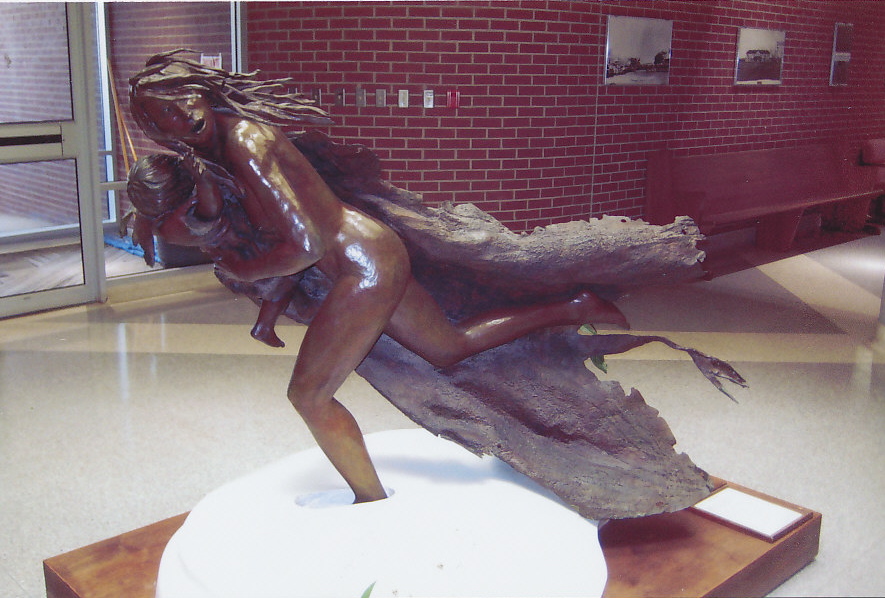
In the Court House next to the painting is a life-size statue of a Indian maiden trying to escape, wrapped in a buffalo blanket, with her baby.
After a short visit to the new Museum of the Washita Battlefield Park, we got a call from my wife Jane saying we should head home as tornadoes were being spotted in central Oklahoma. It turned out we were about 20 minutes behind the tornado that caused 10 deaths.
As we passed through El Reno, Ok. there were six semi trailers turned over on our highway.. We followed the storm all the way to Stillwater where it destroyed several homes.
I believe the good Lord and several Guernsey angels were looking after Hayden and I that day.
Jim Lee
 Who is my granddaddy?