
Chapter 10
MOVING TO THE TEXAS PANHANDLE
While Henry and Sarah were experiencing the wild and wooly days of Fort Griffin, they heard about a better life, in the Texas Panhandle. According to FORT BELKAP FRONTIER SAGA “Griffin had seen its golden days. Buffalo herds began rapidly diminishing about 1875. White man’s slaughter of millions of America’s bison was disgraceful and distasteful. The spectacle of Griffin was not only revolting, but the skinners and ex-wagon teamsters were considered the lowest specimen of humanity”.
For 200 years leading up to 1875, nomadic Indian tribes representing the Apache, Comanche, Kiowa and other roamed the Texas Panhandle following the huge buffalo herds. In 1874-75 the Red River War began a successful effort by the United States Army to force the Indians of the Southern Plains to move to Indian Territory in present day Oklahoma. Two major battles took place in what would become Hemphill County: the Battle of Lyman’s Wagon Train and the Battle of Buffalo Wallow. (Wikipedia)

Hemphill County, Texas was created on August 21, 1876. It is named for John Hemphill, a judge and Confederate congressman. The County seat being Canadian, Texas. It is about this same time that we find Henry Anderson and most of his family moving from Fort Griffin to Hemphill County. The region had become known as “cattle country”, due to both geography and tenacious effort of cattleman, who often harassed farmers off their land. With the threat of Indian raids decreasing and the news of this being cattle country, it had to be appealing to our ranching kinfolks!
As in the past the George, Ratliff and Wilson families were also moving in Hemphill County from Fort Griffin. The families of Georges and the Andersons linked up in Texas around 1850. They would be closely linked for another 50 years.
Phillip S. George married Mary Anderson in 1850
James S. George married Elizabeth Anderson in 1854
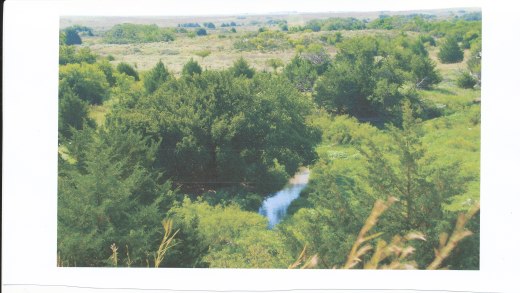
Henry and Sarah moved along the Gageby Creek in Hemphill County. The creek is spring fed and runs year around.
In the book PUT UP OR SHUT UP by Millie Jones Porter, we gained insight about the life on Gageby Creek. Stories from her book are as follows;
“Before the Calhoun family came to the Panhandle, another family, Henry Anderson, moved from Fort Griffin and settled on Gageby. His children were grown and married. He and his wife lived in an old-fashioned log house. Two rooms set apart and connected by a picket hall. The old couple lived in one end of the house and an old Negro servant they had raised and her two grandchildren, a boy and girl, lived in the other end. He was a stockman and ran horses and cattle too. You know then, we never fed anything, just rode the bogs, branded the calves and tailed’em up when they got too poor to get up by themselves”.
“One of the Anderson sons, John Henry lived three miles below his father. William Walter Anderson lived on Spring Creek, near Mobeetie. Another son Albert J. Anderson moved to La Junta, Colorado. He came back down to the Panhandle about 1893, but stayed only a short time and moved on to Oklahoma (the Cheyenne Arapaho land run into Oklahoma). An Anderson daughter, Elizabeth, Mrs. J.J. lived on the Washita River which was not far from her father”.
“A Mrs. Shelton speaks. Yes my father William Walter Anderson was the son of Henry Anderson. We first lived on Chicken Creek. There were only two other white families living near, they were the Harrahs and Lewis The Indians got so bad we moved to Mobeetie. The Indians were there too. Then we moved to Trinidad, but my father was never satisfied, so we moved back to Chicken Creek”.
“The son of William Walter Anderson, John Anderson speaks. We first moved to Chicken Creek, some eight miles north of Mobeetie, then we moved to Spring Creek, Near Mobeetie and Fort Elliott. We had a three room sod house. I wouldn’t have thought a sod house would burn, but that one did. You know sod is plowed earth held together by grass roots. Naturally some grass tops are left too. We had kindling in the corner of the kitchen by the stove and it caught a fire. This ignited the grass in the sod and it crept on and on until the whole house was ruined. Then we had a picket house dashed with mud and covered with tin we got from Fort Elliott. Part of the time we drove in a hack all the way to Mobbeetie to school. Father (William Walter) ran a meat market for years. Earlier my father was a buffalo hunter, I’ve seen him stand in the door and kill buffalo. When he got a load of their hides he would put them in one wagon and mother and us kids in another and go to town. I think it was not so much the hardships or the high cost of things that was hard on mother, but the lack of women friends. I’ll never forget the first time she saw Mrs. Wilson Harrah. The Harrahs had just moved here from Colorado and those two women saw each other they ran to each other and hugged and kissed like long separated sisters. Even now it makes my eyes moist when I think of that sight”. (The population of Hemphill County in 1890 was less than 200).
“Mrs. George speaks, grandma (Sarah) died in 1890. (According to a story from cousin Barbara Close, she supposedly died when a tree blew down on top of the dugout in which they lived). “Grandpa Henry wanted W.E. (W.E. George) to come take charge of things. His Negroes had left him and he needed someone.
Henry married again to Lousia A. Russell on September 12, 1891, she was widowed mother of Lauan Calhoun George. In this ceremony, Henry Anderson became W.E. George’s father-in-law as well as his maternal grandfather.
“Grandpa (Henry M.) Anderson died in 1895, at the age of 86. Mother (Mrs. Calhoun) inherited the old home. He did not own a foot of land.
Near the old Anderson home on Gageby Creek, there is a ranch cemetery. Henry, Sarah, a son Mitchell and daughter Elizabeth, are all buried there. Elizabeth’s grave is marked with a head stone, but Henry, Sarah and Mitchell’s graves are simply marked with rocks. As proud descendants of our colorful, tough and tenacious grandparents, maybe we should make their gravesite right (after 121 years) with head stones! What do you think, Cousins?

Cousin Lee Haygood pointing out Elizabeth Anderson George Smith’s grave stone.The rocks in the lower left corner are markers for Henry, Sarah and Mitchell’s grave.
.
.
 Who is my granddaddy?