
Chapter 19
THE LAW, THE TRAINS, THE FUN TIMES
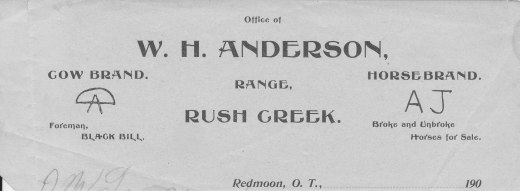
Life on the Red Moon ranch was a challenge for Black Bill Anderson. He raised cattle, horses, hogs and a garden. His daughter said he hired most of the work done as he had difficulty “staying down on the farm”. Probably his earlier cowboy days led to his desire to get back on the horse and go find a good game of Faro. He would leave the ranch for several days to find a poker or faro game in Hamburg or Elk City, Oklahoma, Territory. They said he was often a winner (which we assume paid the bills). In 1907 Black Bill was asked to be a Deputy Sheriff of Roger Mills County. He was excellent with a Colt 38 pistol and a great horseman, probably those were the main qualifications for being a Deputy Sheriff ( a title he carried for 50 years).
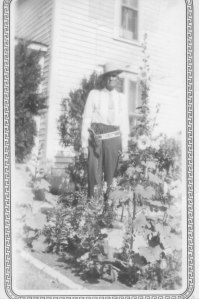
Deputy William Henry Anderson, aka Black Bill and Bill Lee
In 1908 he kept a daily diary that gave us an idea of his life in western Oklahoma. A few of the entries:
Jan. 6, Went to Cheyenne. Me and Uncle Ben bought 40 hogs and 4 steers.
Jan. 7, Gathered corn
Jan. 9, Killed 14 quail, went to Hamburg and killed 1 quail.
Jan. 11, Wind blew hard, no supper, cold wind, hauled wood.
Jan. 13, Served 11 subpoenas and went home.
Jan. 17, Killed hogs for Hughes and Douglass, 4 head $16.00
Jan. 18, Worked around home (rare time he mentioned staying home).
Jan. 21, Went up west, served 6 subpoenas.
Jan. 22, Went to Ilalda Wig sale, bought some dishes.
Jan. 29, Came to Cheyenne. Hendrax turned Matti Strong case to McMurty.
Jan. 31, Beat Spaulding in law suit against Matti. Came home.
In 1912, a railroad station was built in Strong City, OK. It was six miles from Bill’s ranch in the Red Moon community. With the new railroad service, Strong City grew and soon became known as the “broomcorn capital”. The railroad consisted of an old freight engine, cars and caboose.

The railroad brought some challenging times (and arrest) for Sheriff Bob Tramel, Sheriff Hancock and Deputy Bill Anderson.
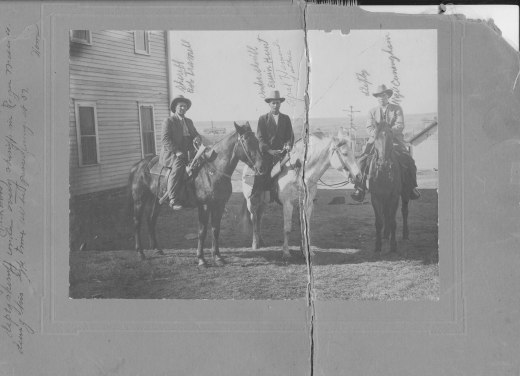 Roger Mills County, left, Sheriff Bob Tramell, Under Sheriff Erwin Hunt and Deputy Cunningham
Earl Archer, a trackman for the railroad told this story; “Two former residents who had moved to the Rio Grand Valley conspired to ship alcohol to Strong City. There it was to be cut and sold in this dry area. Somehow the revenuers found out and watched the alcohol being loaded in the Valley. The shipment consisting of 45 five-gallon square cans and 34 cases of half-gallon jars that were loaded in the middle of the boxcar. Then a pig pen, three feet tall and three feet wide with a steeple roof and running the length of the boxcar was built around the alcohol. Cabbages were piled around and over the pig pen.
The revenue agent followed the boxcar to Strong City. There he planned to arrest whoever picked up the shipment. A leak must have occurred because no one claimed the load. After waiting three days the revenuer ordered the car opened by the law and emptied. The railroad workers were ordered by Sheriff Hancock not to touch the alcohol or he would shoot their fingers off!
Several townspeople gathered for the spectacle and watched as the alcohol was being dumped on the ground. A young boy named Bill Dykes made the remark…I wonder if it would burn? And then dropped a match into a puddle of alcohol. The following conflagration caught the depot on fire and during the ensuing confusion, several containers disappeared, including the five-gallon put in the depot for evidence. Also disappearing was the bill of lading, designating the receiver as a nonexistent business.
After the fire was extinguished and remaining goods dumped in the Washita River, the cabbages were seen floating as far away as Clinton, Oklahoma. Sheriff Hancock and his Deputy took two men by train to Rio Grand Valley to stand trial. On the way Sheriff Hancock died and the two men were released for.. lack of evidence”.
An interesting side story, many years later a Mr. Archer approached me at an Strong City Memorial Day reunion and said he knew Black Bill very well. “ your Granddad ran me out of Strong City, all I was doing was just making moonshine liquor and trying to sell it”
Strong City had their formal opening on June 12, 1912. On this day a huge celebration was held with people coming from near and far. Dedication ceremonies were held naming the town, dedicating the streets and alley to the public, and the right-of-way and station ground to the C & O.W. Railroad. As the celebration went on the liquor supply ran out. Some of the young men borrowed the train to go to Hammon, Oklahoma to restock their liquor supply, causing quite a commotion.
Who said they didn’t have fun in the old days?

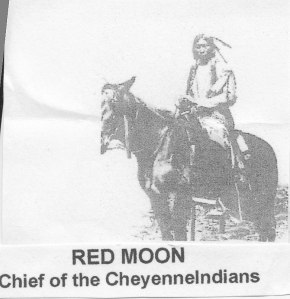
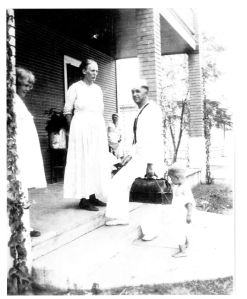

 Who is my granddaddy?